
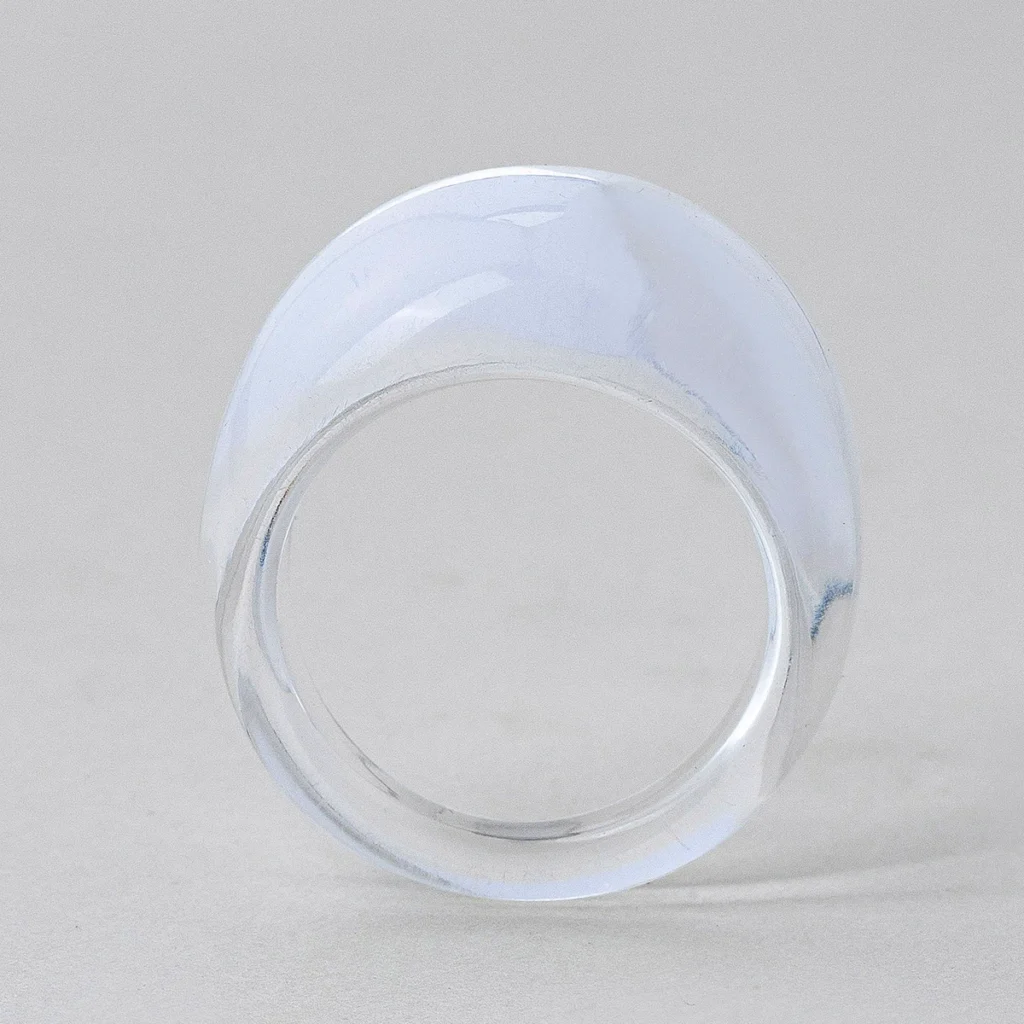
Transparent resin jewelry requires more than simply choosing a clear material. For B2B buyers, the finished appearance depends on resin formulation, color development, transparency, embedded elements, polishing, molding, and quality control. When developing custom transparent earrings, necklaces, rings, bangles, or brooches, buyers should define color and clarity requirements during sampling so the approved sample can become a practical production reference.
What Makes Transparent Resin Jewelry Different?
Transparent resin creates a visual effect that is difficult to achieve with opaque materials. Light can pass through the jewelry, revealing color depth, embedded details, layered effects, or subtle textures.
That same transparency also makes manufacturing defects more visible.
A scratch, uneven edge, cloudy area, trapped bubble, or inconsistent color can be much easier to notice in a transparent component than in a solid-color design.
For wholesale buyers, transparency should therefore be treated as a specific product requirement rather than a simple aesthetic preference.
How Resin Color Works in Transparent Jewelry
Color development is one of the first issues to resolve when ordering custom transparent resin jewelry.
A transparent red, for example, does not necessarily look like an opaque red. The apparent color can change depending on the thickness of the resin, the amount of colorant, the background behind the piece, and the way light passes through it.
This means buyers should evaluate the color on an actual sample instead of approving it only from a digital rendering.
For private label projects, provide a physical color reference when possible. The manufacturer can then develop the resin color and produce a sample for approval.
Once approved, the sample should be retained as the visual reference for bulk production.
Clarity Is More Than Being “Clear”
When buyers describe a resin product as clear, they should clarify what level of transparency they expect.
There are several possible visual directions:
- Crystal-clear: Maximum transparency with minimal visual obstruction.
- Tinted transparent: A visible color while retaining transparency.
- Translucent: Light passes through, but objects or details behind the material are less clearly visible.
- Layered transparent: Multiple colors or resin sections create visual depth.
- Embedded transparent: Decorative elements are positioned inside the resin.
These effects can produce very different finished products even when the base material appears similar.
Haishaer Jewelry’s manufacturing capabilities include transparent and translucent effects, custom resin colors, embedded designs, and resin textures.
What Can Affect Resin Clarity?
For buyers, clarity should be evaluated through the finished sample and production process rather than assumed from the material name.
Important factors include:
Surface Finishing
A transparent piece needs a clean surface because polishing marks and scratches can interfere with its appearance.
Edges are particularly important on transparent jewelry. Rough or unevenly finished edges can change how light travels through the component and become immediately visible.
Thickness
A thick resin section can produce a deeper color effect than a thin section, even when the same color formulation is used.
For custom products, buyers should therefore consider color and thickness together.
Embedded Elements
Embedded flowers, decorative particles, patterns, or other elements can create distinctive visual effects. However, their position needs to be considered during sample development.
A design that looks attractive in a single sample may still require production specifications to achieve consistent positioning across multiple pieces.
Surface Texture
Textures can add visual interest, but they also change how light interacts with transparent resin.
If clarity is the main design objective, buyers should carefully evaluate whether texture enhances the product or reduces the clean transparent appearance they want.
How to Specify a Custom Transparent Resin Product
A useful sourcing brief should provide enough information for the manufacturer to reproduce the intended appearance.
For each design, specify:
- Product category
- Overall dimensions
- Resin thickness
- Base resin color
- Transparency level
- Surface finish
- Embedded elements
- Texture requirements
- Metal components
- Hardware finish
- Branding requirements
- Packaging requirements
Reference images are useful, but they should be supported by written specifications.
For example, instead of saying “make the resin light blue and transparent,” specify the desired color reference and explain whether the finished material should be crystal-clear, tinted transparent, or translucent.
This reduces interpretation during sample development.
Sampling Is Essential for Color and Clarity
Digital artwork cannot fully predict the appearance of a transparent resin component.
The physical sample allows buyers to evaluate:
- Actual color
- Transparency
- Visual depth
- Edge finishing
- Surface quality
- Embedded element placement
- Resin thickness
- Hardware proportion
- Overall appearance under normal lighting
Lighting should also be considered during approval. Transparent jewelry can look different against a white background, dark display surface, or natural light.
For wholesale sourcing, the approved physical sample should become the primary visual reference for production.
Quality Control for Transparent Resin Jewelry
Transparent products require careful visual inspection because imperfections are easier to see.
A wholesale inspection checklist can include:
Color consistency: Compare production pieces against the approved sample.
Clarity: Check for unexpected cloudiness or changes in transparency.
Surface quality: Look for scratches, polishing marks, cracks, and visible surface defects.
Edges: Check that edges are smooth and consistently finished.
Shape: Compare dimensions and geometry with the approved specifications.
Embedded details: Confirm that decorative elements remain in the intended position and orientation.
Hardware: Inspect metal components, attachment points, and alignment.
For larger production orders, inspecting multiple pieces is more useful than relying on a single finished item.
Transparent Resin and Metal Components
Many transparent resin jewelry designs combine resin with metal hardware or decorative components.
Depending on the design, copper and zinc alloy components can be incorporated into the finished jewelry.
The relationship between transparent resin and metal should be considered during sampling. Because transparent material reveals more of the construction, attachment points and hardware alignment may become part of the overall visual design.
A buyer should therefore evaluate the complete assembled piece rather than approving the resin component separately from the hardware.
Packaging Considerations
Transparent and polished jewelry surfaces should be protected during packaging and transportation.
Packaging requirements should be discussed before production, particularly for private label collections.
Haishaer Jewelry can provide logo cards, gift boxes, barcode labels, and private label packaging. The packaging format should be selected according to the product size, presentation requirements, and protection needed during shipping.
For wholesale buyers, it is useful to approve the jewelry and packaging as a complete retail-ready product.
How to Evaluate a Transparent Resin Jewelry Manufacturer
A manufacturer should be able to explain how it handles custom color development, transparency, sampling, finishing, and quality inspection.
Look for a supplier that can clearly discuss:
- Custom resin colors
- Transparent and translucent effects
- Resin textures
- Embedded designs
- Hardware selection
- Hand polishing
- Quality inspection
- Sample approval
- Private label packaging
Haishaer Jewelry is an OEM and ODM resin jewelry manufacturer based in Qingdao, China. The company has more than 20 years of resin jewelry craftsmanship experience and a 1,100-square-meter factory.
Its product range includes resin earrings, necklaces, rings, bangles, brooches, hair accessories, and custom resin components.
Planning a Custom Transparent Resin Collection
Transparent resin can support a wide range of wholesale product concepts, but successful production starts with precise specifications.
Rather than selecting a clear resin color from a catalog and immediately placing a bulk order, buyers should define the intended color, transparency, thickness, surface finish, and embedded details. The manufacturer can then develop a physical sample for evaluation.
Once the sample meets the required appearance and construction standards, document the specifications and use the approved sample as the production reference.
For buyers developing a private label transparent resin jewelry collection, this approach helps connect the original design concept with practical manufacturing requirements.
If you are developing custom transparent resin jewelry, share your design references, color requirements, dimensions, and packaging needs with Haishaer Jewelry to discuss sample development and production.
Buyer Questions
1. Can transparent resin jewelry be produced in custom colors?
Yes. Custom resin colors can be developed for transparent and translucent jewelry. Buyers should approve the color on a physical sample because transparency and thickness can affect its final appearance.
2. How should I evaluate the clarity of a transparent resin sample?
Inspect the sample under normal lighting and against different backgrounds. Check transparency, surface quality, edges, embedded details, and any visible cloudiness or imperfections.
3. Should transparency and resin thickness be specified separately?
Yes. Thickness can influence the visual depth and apparent color of transparent resin. Both requirements should be included in the product specification and confirmed through sampling.