
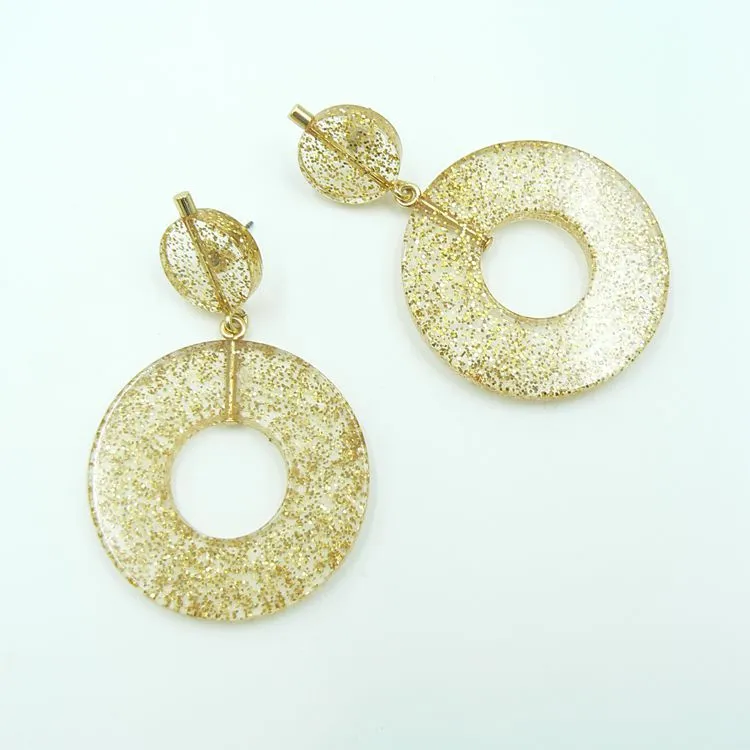
Custom resin jewelry production starts long before the first finished piece leaves the factory. For B2B buyers, the process usually moves through several stages: design briefing, technical review, sample development, color and material approval, production preparation, bulk manufacturing, and quality inspection.
Understanding these stages helps buyers provide better specifications, identify potential production problems earlier, and make clearer decisions before approving a bulk order.
Haishaer Jewelry is an OEM and ODM resin jewelry manufacturer based in Qingdao, China. Its manufacturing capabilities include custom resin colors, transparent and translucent effects, embedded designs, resin textures, enamel coating, copper and zinc alloy components, hardware selection, hand polishing, quality inspection, and private label packaging.
1. Start With a Clear Design Brief
A good custom jewelry project begins with a usable design brief.
The brief should provide enough information for the manufacturer to understand what needs to be produced. Depending on the product, this may include:
- Product type
- Reference drawings or images
- Dimensions
- Shape requirements
- Resin color
- Transparent or translucent effects
- Embedded elements
- Surface texture
- Metal components
- Hardware requirements
- Logo requirements
- Packaging specifications
- Estimated order quantity
The more specific the brief, the easier it is for the manufacturer to identify technical requirements before sampling.
For example, saying “make a translucent green resin earring” leaves many details open. A more useful specification could define the approximate size, shape, transparency level, color reference, metal hardware, and finishing requirements.
2. Review the Design for Manufacturing
A design that looks good on screen may still require adjustment before it can be produced consistently.
During the technical review, the manufacturer may need to consider the shape, thickness, attachment points, hardware, polishing requirements, and overall construction.
For resin jewelry, details such as very thin sections, sharp corners, small embedded elements, or complicated hardware connections can affect production.
This stage is also where buyers should clarify which elements are fixed and which can be adjusted to improve manufacturability.
The goal is not to change the buyer’s concept unnecessarily. It is to identify potential production problems before they become expensive changes during bulk manufacturing.
3. Confirm Materials, Colors, and Finishing
Once the basic design is understood, the material specification needs to be established.
Resin can be produced with different visual effects, including opaque, transparent, and translucent appearances. Buyers may also request embedded designs or specific surface textures.
Color is another important consideration. A custom resin color should be discussed using a clear reference wherever possible.
The buyer and manufacturer should also confirm finishing requirements. Depending on the design, this may include hand polishing, enamel coating, or the use of copper and zinc alloy components.
These specifications should be agreed upon before final sample approval because changes in material appearance or finishing can affect the final product.
4. Develop the Prototype or Sample
The sample is where the design moves from a concept into a physical product.
A buyer can use the sample to evaluate:
- Overall shape
- Dimensions
- Resin color
- Transparency
- Surface finish
- Hardware
- Weight and appearance
- Embedded details
- Assembly
For custom projects, this stage is particularly important because some visual characteristics cannot be fully judged from drawings or digital renderings.
A sample may also reveal that a color looks different in actual resin than it did on a screen. Similarly, a design that appears balanced in artwork may need a small dimensional adjustment when manufactured.
Buyers should review samples against the original specification rather than judging them only on overall appearance.
5. Approve the Final Sample
Bulk production should begin only after the buyer has clearly approved the production specification.
The approved sample becomes an important reference for the production team. The buyer should ensure that the final requirements are documented, including the approved color, dimensions, hardware, finishing, and any packaging details.
For projects with multiple colors or variations, each required variation should be clearly identified.
This is especially important for private label collections where several SKUs may share a similar design but use different colors or components.
6. Prepare for Bulk Production
After sample approval, the manufacturer prepares the project for production.
Production preparation can include organizing resin materials, color requirements, components, hardware, production tooling, packaging materials, and quality inspection requirements.
The bulk order should also be reviewed by SKU and quantity.
If the project contains several designs or colors, buyers should provide a clear breakdown rather than only stating the total order quantity.
For example:
| Production Information | Buyer Specification |
| Product | Resin earrings |
| Designs | Multiple SKUs |
| Color | Custom colors |
| Hardware | Specified metal components |
| Quantity | By SKU |
| Packaging | Private label |
| Quality standard | Approved sample |
This gives the production team a clearer reference for the order.
7. Manufacture the Resin Components
The actual manufacturing process depends on the product design and construction.
Resin components are produced according to the approved specifications, with attention to shape, color, texture, and embedded details where required.
For custom resin jewelry, consistency is particularly important when multiple pieces belong to the same SKU.
The manufacturer must maintain the intended appearance across the production batch while also coordinating resin components with metal hardware and other elements.
Different designs may require different production and finishing approaches, so buyers should avoid assuming that every resin jewelry product follows exactly the same manufacturing sequence.
8. Finish and Assemble the Jewelry
After the resin components are produced, additional finishing and assembly may be required.
Depending on the design, this can include:
- Hand polishing
- Enamel coating
- Hardware installation
- Assembly with copper or zinc alloy components
- Attachment of jewelry findings
- Final surface cleaning
The finishing stage has a direct effect on how the product looks and feels.
For example, polishing can influence surface clarity and smoothness, while hardware selection affects both appearance and construction.
Buyers should make sure these details were already established during the sampling stage so the bulk production team has a clear standard to follow.
9. Perform Quality Inspection
Quality inspection should not be treated as an afterthought.
Finished resin jewelry can be checked for visible defects, color consistency, surface finish, hardware attachment, and overall appearance against the approved sample.
For buyers, it is useful to define what constitutes an acceptable product before bulk production begins.
A practical quality specification might address:
- Color consistency
- Surface defects
- Scratches or visible marks
- Shape accuracy
- Hardware attachment
- Polishing quality
- Packaging condition
Clear inspection requirements reduce the possibility of disagreements after production is completed.
10. Complete Private Label Packaging
For private label buyers, the product is not finished when the jewelry itself is completed.
Packaging may include logo cards, gift boxes, barcode labels, or other customized components.
Packaging requirements should therefore be included in the original project discussion rather than added at the final stage.
Buyers should confirm artwork, packaging dimensions, labeling information, quantities, and packing instructions before production begins.
For buyers looking at different resin jewelry categories, the Haishaer Jewelry product range provides examples of product types that can be developed for wholesale and private label applications.
Why the Design-to-Production Process Matters
The biggest sourcing risks often appear when one stage is skipped or poorly documented.
A buyer may have a strong design but an unclear color specification. A sample may be approved without confirming hardware. Packaging may be discussed only after the bulk order has already started.
Each of these situations can create unnecessary revisions.
A better approach is to treat custom resin jewelry as a staged development process:
Design brief → Technical review → Material and color confirmation → Sample → Sample approval → Production preparation → Bulk manufacturing → Finishing and assembly → Quality inspection → Packaging
Each stage answers a different production question.
For buyers working with an OEM or ODM manufacturer, this structured process makes communication easier and gives both sides a clearer reference for the final product.
Haishaer Jewelry provides OEM and ODM resin jewelry manufacturing from its Qingdao, China facility, with capabilities covering resin customization, hardware, finishing, quality inspection, and private label packaging. Buyers can contact Haishaer Jewelry with a design brief, reference images, estimated quantities, and customization requirements to discuss a project.
Buyer Questions
1. What information should I provide when requesting a custom resin jewelry sample?
Provide the product type, design references, approximate dimensions, resin color, finishing requirements, hardware specifications, expected quantity, and packaging requirements when applicable.
2. Can I change the design after receiving the sample?
Yes, sample review is specifically useful for identifying adjustments. However, significant changes to shape, materials, color, or construction may require another sample or additional production preparation.
3. What should I use as the quality standard for bulk production?
The approved production sample, together with the confirmed specifications for color, dimensions, materials, finishing, hardware, and packaging, should provide the main reference for bulk production and inspection.