
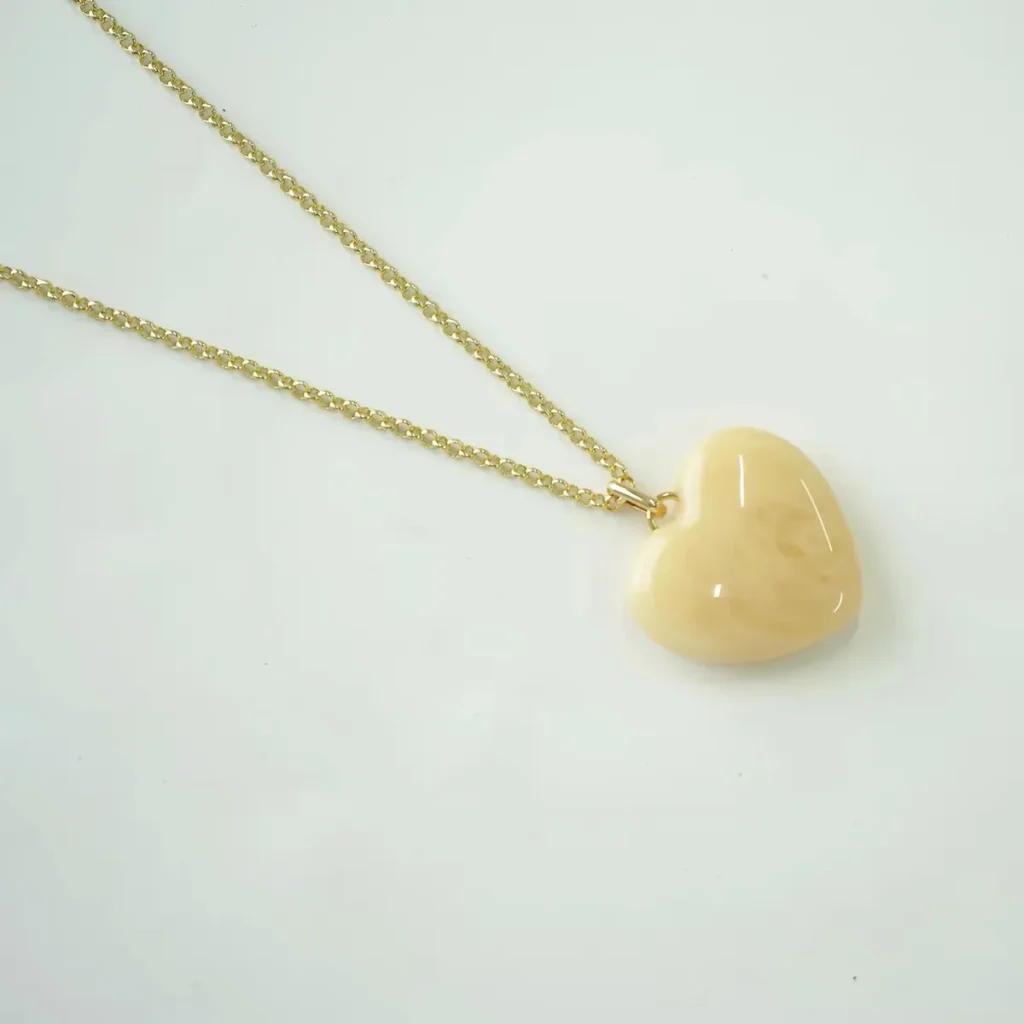
Hardware attachment and assembly quality control (QC) are essential for preventing loose components, detached earring hooks, weak jump rings, and other defects in resin jewelry. For wholesale buyers and private label brands, the best approach is to define attachment requirements before sampling, approve the finished construction, and inspect both component security and appearance during bulk production.
Resin jewelry often combines molded or hand-finished resin components with metal findings, such as earring posts, hooks, jump rings, chains, clasps, and brooch pins. Because these materials have different physical properties, each connection point needs an appropriate attachment method and a clear inspection standard.
Why Hardware Attachment QC Matters for Resin Jewelry
A resin jewelry piece can look attractive while still having an assembly defect. A loose connection may not be obvious during a quick visual inspection, but it can cause a component to detach during handling, packing, or normal use.
Common assembly defects include:
Earring posts that loosen or detach from resin components.
Jump rings that are not fully closed.
Chains or connectors attached at the wrong angle.
Brooch pins that are misaligned or inadequately secured.
Metal findings with scratches, plating defects, or inconsistent color.
Resin surfaces damaged during drilling, bonding, or assembly.
These problems can lead to customer complaints, returns, rework, and additional inspection costs. A structured QC process helps buyers identify defects before shipment rather than after products reach the market.
1. Identify Every Hardware Connection in the Product Specification
The first step is to document the hardware used in each design. Buyers should not rely on product photographs alone because the attachment method may be hidden from view.
For custom resin earrings, the specification may include earring posts, hooks, jump rings, and decorative connectors. Resin necklaces may require pendant loops, chains, and clasps, while resin brooches need secure pin mechanisms.
A practical hardware specification should identify:
Component type and material.
Size and dimensions.
Plating color or surface finish.
Attachment location and orientation.
Required attachment method.
Acceptable appearance and alignment.
Any applicable safety or performance requirements.
For private label orders, the approved sample should reflect these requirements. If the factory proposes changing a metal component or attachment method, the buyer should review and approve the change before bulk production.
2. Choose an Attachment Method Suitable for Resin Jewelry
Different connections require different assembly methods. The appropriate choice depends on the resin design, component geometry, expected use, and manufacturing process.
Adhesive Bonding
Adhesive bonding is commonly considered when attaching metal findings to a resin surface. Performance depends on the adhesive, surface preparation, bonding area, curing conditions, and compatibility of the materials.
Buyers should ask the manufacturer to confirm that the adhesive and bonding process are suitable for the specific resin and hardware combination.
QC checks should include:
Correct component positioning.
No visible adhesive residue.
No obvious gaps or incomplete bonding.
No movement or separation under an agreed inspection method.
Adequate curing before inspection and packing.
Mechanical Attachment
Some designs use holes, embedded components, loops, or other mechanical features to connect resin and metal parts.
These methods can provide a different load path from surface bonding, but they also require careful control of hole position, wall thickness, edge distance, and component fit.
Inspect for cracks around drilled holes, uneven openings, loose fittings, and visible damage caused during assembly.
Embedded Hardware
In certain designs, metal loops or connectors are incorporated into the resin component during production.
The factory should control the position and depth of the embedded part, as well as the surrounding resin structure. QC should check for exposed sharp edges, incorrect orientation, visible cracks, and unexpected movement.
Not every attachment method is appropriate for every design. Buyers should evaluate the approved sample and confirm the manufacturer’s proposed construction before production begins.
3. Inspect the Main Hardware Components
Hardware inspection should cover both the condition of individual findings and their installation in the finished product.
| Component | Key QC Checks |
| Earring posts | Position, alignment, attachment security, and surface condition |
| Earring hooks | Correct type, finish, orientation, and secure connection |
| Jump rings | Proper closure, no obvious gaps, and correct positioning |
| Chains and clasps | Smooth operation, secure connections, and correct components |
| Brooch pins | Alignment, secure installation, and functional opening and closing |
| Metal connectors | Correct dimensions, plating appearance, and attachment stability |
A component may pass incoming inspection but still become defective during assembly. For this reason, buyers should evaluate hardware both before installation and as part of the finished jewelry piece.
4. Establish Clear Assembly QC Checkpoints
A reliable inspection process should cover several stages rather than relying on a final visual check alone.
Incoming Component Inspection
Before assembly, check metal findings for scratches, deformation, plating inconsistencies, incorrect sizes, and mismatched specifications.
Reject or separate nonconforming components before they enter production.
First-Piece Assembly Approval
The first assembled pieces should be compared with the approved sample and product specification.
Confirm component positioning, adhesive application where applicable, alignment, finishing, and overall construction. If the first pieces show problems, correct the process before proceeding with the full batch.
In-Process Inspection
During production, inspect selected pieces for recurring assembly defects. Pay particular attention to designs that require manual positioning, bonding, drilling, or repeated handling.
If defects appear, identify the affected production range and investigate the cause before continuing.
Final Inspection
Finished products should undergo visual and functional checks before packing.
Inspect for loose findings, open jump rings, incorrect component orientation, visible adhesive residue, surface damage, and other defects defined in the approved QC standard.
The factory and buyer should agree on the sampling plan, defect classifications, and acceptance criteria before production. No single inspection quantity or acceptance threshold is suitable for every order.
5. Define Attachment Strength Requirements Before Bulk Production
Attachment strength is especially important for jewelry components that experience repeated handling or movement.
However, a universal pull-force requirement is not appropriate for every resin jewelry design. A small earring post, a heavy pendant connector, and a brooch pin have different structures and functional requirements.
Buyers should ask the manufacturer to establish a suitable test method for each relevant connection.
Depending on the design, checks may include:
Controlled manual stability checks.
An agreed pull or separation test.
Repeated opening and closing of functional mechanisms.
Inspection for cracks or deformation after testing.
Where quantitative strength requirements are necessary, specify the test setup, applied force, duration, sample quantity, and pass/fail criteria. These requirements should be established through product development and appropriate testing rather than selected arbitrarily.
Testing should also avoid damaging saleable products unnecessarily. Destructive tests may require designated test samples or separate inspection specimens.
6. Check Resin Damage Around Attachment Points
Hardware-related defects do not always originate in the metal components. The resin itself may be damaged during drilling, bonding, pressing, or assembly.
Inspect the following areas carefully:
Around earring post attachment points.
Along drilled holes and narrow resin sections.
Near embedded metal loops.
Around pendant connection points.
At the edges of resin pieces under mechanical stress.
Look for hairline cracks, chips, stress marks, and separation between resin and hardware.
Thin resin sections and narrow connection areas may need additional design review before production. If an attachment repeatedly causes cracks, the solution may involve changing the geometry, repositioning the connection, or revising the assembly method instead of simply adding more adhesive.
7. Control Assembly Consistency Across Bulk Orders
A sample can be assembled correctly while bulk production varies if workers use different positioning methods, adhesive quantities, curing conditions, or component specifications.
To reduce this risk, buyers should ask suppliers to maintain consistent assembly instructions and use the approved sample as a reference.
Useful controls include:
Written assembly instructions or visual work guides.
Defined adhesive application and curing procedures.
Approved hardware specifications.
First-piece approval after setup or component changes.
In-process checks for recurring defects.
Traceability for relevant materials and production batches.
For repeat orders, the manufacturer should confirm whether the same hardware and assembly process will be used. Any material or process change that could affect attachment performance should be reviewed before production.
8. Build an Assembly QC Checklist for Your Supplier
B2B buyers can use the following checklist when reviewing a resin jewelry manufacturer or preparing a purchase order.
| Inspection Area | Acceptance Requirement |
| Hardware specification | Matches the approved product specification |
| Component positioning | Correct location, orientation, and alignment |
| Attachment security | Meets the agreed inspection or test criteria |
| Resin condition | No unacceptable cracks, chips, or stress damage |
| Metal finish | No unacceptable scratches, deformation, or plating defects |
| Adhesive application | No visible residue or incomplete bonding |
| Functional components | Open, close, or move as intended |
| Appearance | Consistent with the approved sample |
| Bulk consistency | Matches the agreed construction and assembly standard |
| Documentation | Inspection findings and nonconformities are recorded |
This checklist should be adapted to the product design. Not every item applies to every jewelry category, and any safety-critical or market-specific requirement should be documented separately.
9. How to Evaluate a Resin Jewelry Manufacturer’s Assembly QC
When comparing suppliers, ask them to explain how they inspect hardware attachment and assembly, not simply whether they offer quality control.
Useful questions include:
How are hardware materials and dimensions verified before assembly?
How does the factory control adhesive application and curing?
What checks are used to identify loose or misaligned components?
Are attachment tests defined for designs with higher separation risks?
How are defective products isolated and reworked?
Will the factory notify the buyer before changing an approved component or process?
Requesting clear answers helps buyers understand whether the supplier has a repeatable process or relies primarily on workers noticing defects by eye.
Haishaer Jewelry is an OEM and ODM resin jewelry manufacturer based in Qingdao, China, with more than 20 years of resin jewelry craftsmanship experience and a 1,100-square-meter factory. Its manufacturing capabilities include hardware selection, hand polishing, quality inspection, custom resin development, and private label packaging.
For brands, wholesalers, and importers developing custom resin earrings, necklaces, rings, bangles, and brooches, hardware specifications and assembly inspection should be discussed during sampling rather than postponed until bulk production. Buyers can explore the Haishaer Jewelry product range or contact the team to discuss product designs, component requirements, and quality expectations.
Buyer Questions
1. How can buyers check whether resin earring posts are securely attached?
Compare the finished pieces with the approved sample, inspect the attachment area for gaps or cracks, and use an agreed stability or pull-test method when appropriate. The acceptance criteria should be defined before bulk production.
2. Is adhesive bonding always the best method for attaching hardware to resin jewelry?
No. The suitable method depends on the resin, hardware design, bonding area, component geometry, and expected use. Adhesive bonding, mechanical attachment, and embedded hardware each have different design and process requirements.
3. Should hardware attachment QC be included in the final inspection?
Yes, but it should not be limited to final inspection. Incoming component checks, first-piece approval, and in-process inspections help detect problems earlier and reduce the risk of recurring assembly defects.