
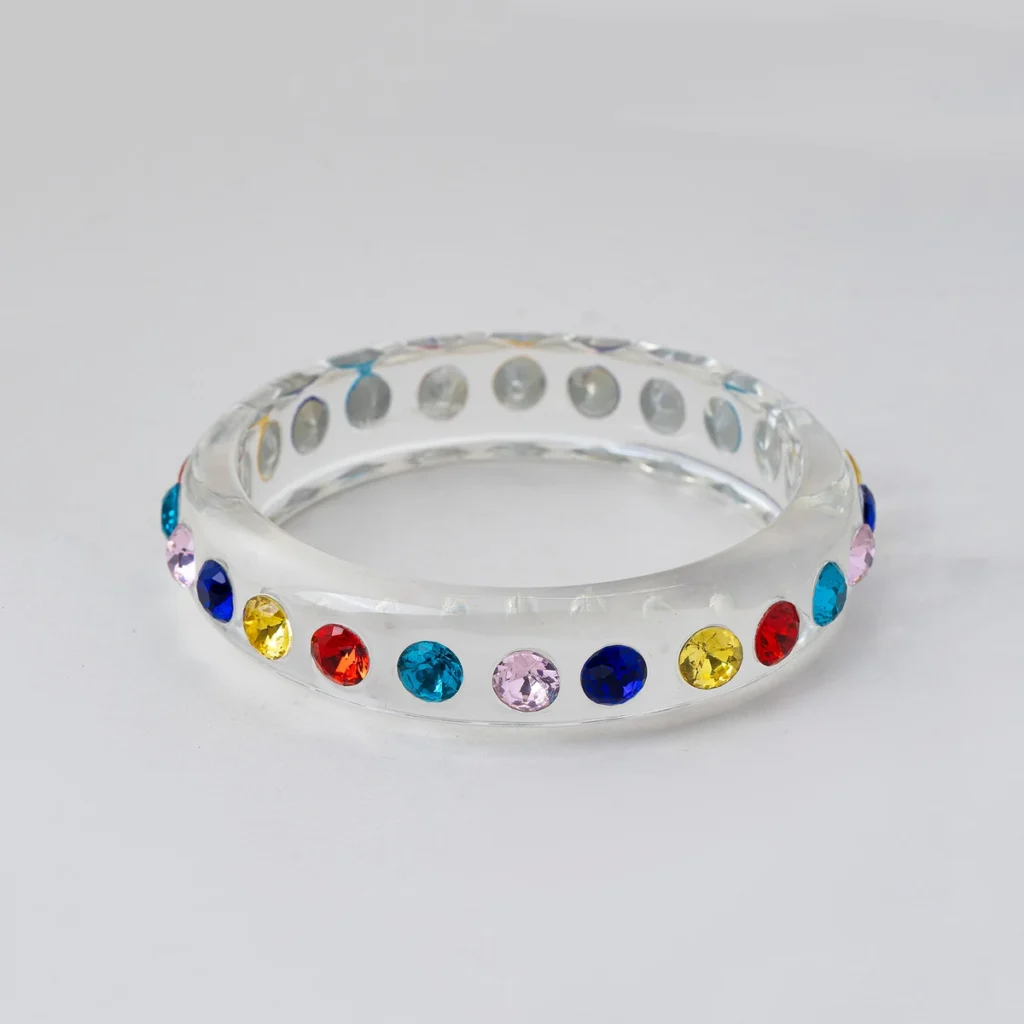
Choosing between OEM and ODM resin jewelry manufacturing depends on how much control your brand needs over product design, how much development support you require, and how you plan to manage cost, sampling, and production. OEM is generally a better fit for brands with established designs and detailed specifications, while ODM can suit buyers who want to develop a collection with support from a manufacturer’s existing designs and product development capabilities.
For jewelry brands, wholesalers, importers, and private label businesses, the right model can influence development costs, product differentiation, sample revisions, and the efficiency of repeat orders. Before requesting a quotation, understand what each model involves and confirm which services your supplier actually provides.
What Is OEM Resin Jewelry Manufacturing?
OEM stands for Original Equipment Manufacturer. In resin jewelry sourcing, OEM generally means the buyer provides the design concept or product specifications, and the manufacturer produces the jewelry according to the agreed requirements.
The buyer may supply technical drawings, reference samples, dimensions, color specifications, hardware details, and packaging requirements. The manufacturer then evaluates feasibility, develops samples, and manufactures the approved products.
OEM is often suitable for brands that already have a defined visual identity and need a manufacturing partner to reproduce their designs consistently.
When OEM Is the Better Choice
OEM resin jewelry manufacturing may be appropriate when your brand needs:
Distinctive product designs: You have original designs or detailed specifications that differentiate your collection.
Precise color control: Your collection requires defined resin colors, transparency levels, or embedded patterns.
Specific construction: You need particular dimensions, metal attachments, surface finishes, or assembly methods.
Consistent repeat production: You want future orders to follow an approved sample and documented specifications.
Brand-specific packaging: Your products require customized logo cards, gift boxes, labels, or retail-ready presentation.
For example, a jewelry brand may have a distinctive resin earring design with a specific color gradient, geometric shape, and gold-tone metal attachment. An OEM project would focus on translating those requirements into a manufacturable product and reproducing the approved result.
The more detailed the design, the more important it becomes to document tolerances, material choices, and acceptable variations before mass production.
What Is ODM Resin Jewelry Manufacturing?
ODM stands for Original Design Manufacturer. In this model, the manufacturer contributes more to product design and development. Depending on the supplier, buyers may select an existing design, modify a standard product, or work with the manufacturer to develop a variation for their collection.
ODM can help buyers who have a target market, product style, or brand concept but do not have complete technical designs ready for manufacturing.
The exact level of design support varies by factory. Some suppliers offer a catalog of existing styles, while others can adjust colors, dimensions, materials, or hardware. Buyers should confirm whether new molds, custom development, or exclusive designs are available rather than assuming every ODM supplier offers the same services.
When ODM Is the Better Choice
ODM resin jewelry manufacturing may be appropriate when your brand needs:
A faster starting point: You want to evaluate existing product designs before investing in new development.
Design support: Your team has a concept but limited technical drawing or product engineering resources.
A coordinated collection: You want to select related earrings, necklaces, rings, bangles, or brooches.
Controlled customization: You want to modify colors, finishes, or hardware without developing every component from scratch.
Lower development complexity: You prefer to start from a proven design framework, subject to the supplier’s actual production history and capabilities.
For example, a wholesaler planning a seasonal collection may choose several existing resin jewelry styles and request a coordinated color palette and updated hardware. ODM can provide a practical starting point without requiring every style to be developed from an entirely new design brief.
However, ODM does not automatically guarantee a lower MOQ, lower total cost, or shorter lead time. These factors depend on the design, required modifications, material availability, production schedule, and supplier terms.
OEM vs ODM Resin Jewelry: Key Differences
The main difference is how the product design is developed and who contributes the initial design specifications. The actual division of responsibilities should be confirmed with each manufacturer.
| Factor | OEM Resin Jewelry | ODM Resin Jewelry |
| Starting point | Buyer’s design or detailed specifications | Manufacturer’s existing design or development concept |
| Design responsibility | Primarily buyer-led | Greater manufacturer involvement |
| Customization | Can follow detailed brand-specific requirements | Often begins with existing designs and agreed modifications |
| Development work | May require extensive sample development for original designs | May reduce initial design work when existing products are suitable |
| Product differentiation | High potential with original designs | Depends on permitted modifications and design availability |
| Tooling requirements | May require custom molds or tooling | Existing tooling may be usable, depending on the product |
| MOQ | Depends on product and production requirements | Depends on product and customization requirements |
| Intellectual property | Requires clear agreements covering buyer-supplied designs and newly developed elements | Requires clear agreements covering existing designs, modifications, and exclusivity |
| Best suited for | Brands with defined product concepts | Buyers seeking design support or a starting point for customization |
Neither model is inherently superior. The right choice depends on how much design control your brand needs and what resources you have available internally.
How to Choose the Right Model for Your Brand
Before selecting OEM or ODM, assess your design readiness, product positioning, budget, and sourcing priorities.
1. Evaluate Your Design Readiness
If you already have technical drawings, physical references, dimensions, colors, and hardware specifications, OEM may be the more direct route.
If you have only inspiration images, a target customer, or a general style direction, ODM may provide a more practical starting point. A manufacturer can help you evaluate existing options and identify which modifications are feasible.
For either model, clarify what information is needed before sampling. Incomplete specifications can lead to unnecessary revisions, inconsistent expectations, and delays.
2. Consider Your Brand Differentiation Strategy
Brands competing through original design may prefer OEM because they can define distinctive shapes, colors, patterns, and construction details.
Brands focused on assortment breadth, seasonal updates, or wholesale distribution may benefit from ODM if suitable designs already exist.
However, choosing ODM does not mean your products must remain standard. Ask which elements can be customized and whether the manufacturer offers exclusive development arrangements. Confirm the commercial and intellectual property terms in writing.
3. Compare Total Development Costs
Do not compare OEM and ODM using unit price alone.
OEM projects may involve design preparation, new molds, tooling, sample revisions, or custom components. ODM projects may reduce some initial development work when existing designs and tooling are suitable, but customization can still create additional costs.
Request a quotation that separates applicable development charges, tooling, sample costs, production pricing, hardware, packaging, and shipping terms.
Also compare the expected cost at your intended order quantity. A design that appears economical at a large volume may not be suitable for a smaller initial order.
4. Check MOQ and Production Feasibility
Minimum order quantity (MOQ) is determined by the product and production conditions, not simply by whether the project is OEM or ODM.
Custom resin colors, specialized hardware, new molds, and multiple product variations may affect production planning. Even an existing ODM design may require a minimum quantity for a particular color or packaging configuration.
Ask the supplier to confirm MOQ by style, color, and customization level. If you plan to launch several styles, find out whether quantities can be combined or whether each style requires a separate order.
5. Review Sampling and Quality Control
Sample approval is essential for both OEM and ODM projects.
For OEM, compare the sample against your drawings, reference images, color requirements, dimensions, and hardware specifications.
For ODM, check whether the proposed design meets your brand standards and whether the requested modifications can be reproduced consistently.
Inspect resin surfaces for bubbles, scratches, cloudiness, rough edges, and uneven coloration. Check the attachment points, metal components, product dimensions, and overall finish.
Once approved, retain a reference sample and written specifications. These records help the manufacturer maintain consistency during bulk production and repeat orders.
What to Confirm Before Signing an OEM or ODM Agreement
The manufacturing model alone does not establish ownership, exclusivity, or product rights. These details should be agreed upon separately.
Before placing an order, clarify:
Design ownership: Who owns buyer-supplied artwork, technical drawings, and newly developed designs?
Existing designs: What rights does the manufacturer retain over standard ODM products?
Exclusivity: Is the product exclusive to your brand, and what are the limits of that exclusivity?
Tooling ownership: Who owns custom molds and tooling, and who can use them?
Approved specifications: Which sample, colors, dimensions, materials, and hardware define the final product?
Production changes: Must the manufacturer obtain approval before changing materials, components, or manufacturing methods?
Defect handling: How will nonconforming products be inspected, reported, and resolved?
Packaging and branding: Which logo cards, labels, barcodes, and gift boxes are included in the agreement?
For private label buyers, these details can be as important as the choice between OEM and ODM. A clear written agreement reduces misunderstandings and supports more predictable long-term sourcing.
How Haishaer Jewelry Can Support Your Resin Jewelry Project
Haishaer Jewelry is an OEM and ODM resin jewelry manufacturer based in Qingdao, China. With more than 20 years of resin jewelry craftsmanship experience and a 1,100-square-meter factory, the company works with jewelry brands, wholesalers, importers, private label companies, and gift businesses.
Its product range includes resin earrings, necklaces, rings, bangles, brooches, hair accessories, and custom resin components. Manufacturing capabilities include custom resin colors, transparent and translucent effects, embedded designs, resin textures, enamel coating, copper and zinc alloy components, hardware selection, hand polishing, quality inspection, and private label packaging.
When discussing a project with a potential supplier, provide your product concept, target quantity, customization requirements, target price range, and packaging needs. This information helps the manufacturer assess whether an OEM or ODM approach is more appropriate for your collection.
You can explore the Haishaer Jewelry product range to review available resin jewelry categories before preparing your sourcing brief.
Final Recommendation: OEM or ODM?
Choose OEM when your brand has defined designs, needs detailed control over product specifications, or competes through original product development. Choose ODM when you need design support, want to start from existing products, or prefer to customize a manufacturer’s available designs.
If you are unsure, ask the manufacturer to evaluate both approaches for the same product concept. Compare the proposed sample, development charges, MOQ, production cost, lead time, customization limits, and intellectual property terms before making a decision.
Haishaer Jewelry can discuss your requirements for custom resin jewelry, product development, and private label packaging. Share your design references, target quantities, and preferred customization level through the Haishaer Jewelry contact page to discuss your project.
Buyer Questions
1. Is OEM resin jewelry always more expensive than ODM?
No. OEM may require new tooling or more development work, while ODM may use existing designs. Actual costs depend on customization, materials, order quantities, and production requirements.
2. Can I customize colors and packaging for ODM resin jewelry?
Often, yes, but the available options depend on the manufacturer and the selected design. Confirm color matching, hardware choices, packaging options, and any additional charges before ordering.
3. Who owns the design when I order ODM resin jewelry?
Ownership depends on the contract and the design’s origin. Confirm the rights to existing designs, your modifications, custom artwork, tooling, and any exclusivity arrangements in writing.