
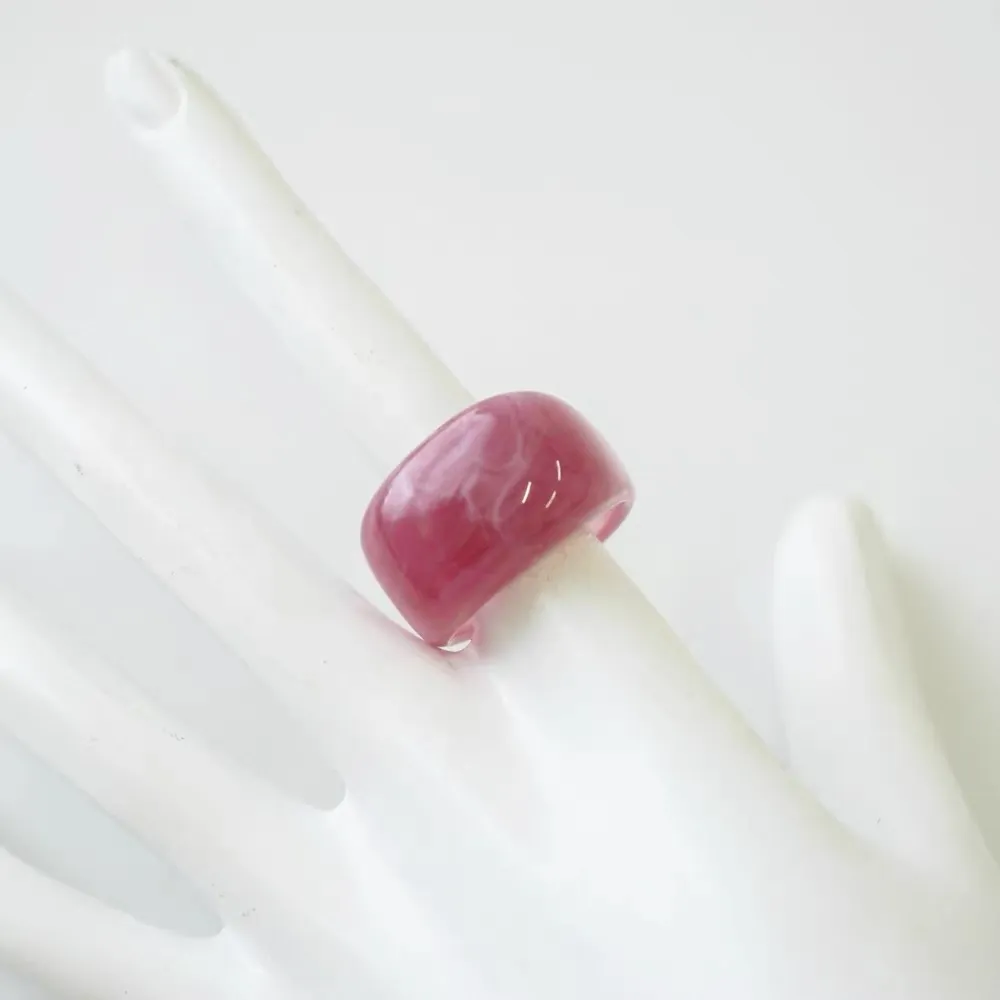
Choosing a resin jewelry manufacturer requires more than comparing quotations. Before placing an order, B2B buyers should evaluate the supplier’s material knowledge, customization capabilities, sample quality, production consistency, quality control procedures, communication, and packaging options. A manufacturer that can produce an attractive sample may not necessarily be able to reproduce the same color, finish, and construction across a bulk order.
For jewelry brands, wholesalers, importers, and private label businesses, a structured supplier evaluation helps reduce quality risks, prevent costly revisions, and establish a more reliable sourcing relationship. The key is to verify what the manufacturer can actually produce and how it controls quality before committing to production.
1. Verify the Manufacturer’s Experience with Resin Jewelry
Start by checking whether the supplier specializes in resin jewelry or primarily manufactures other types of accessories. Resin jewelry requires specific skills in material selection, color formulation, molding, curing, finishing, and hardware assembly.
Ask the manufacturer about its experience with the product categories you plan to purchase, such as resin earrings, necklaces, rings, bangles, brooches, or hair accessories. A supplier experienced in flat resin pendants may not automatically have the same capabilities for thick molded bangles or intricate embedded designs.
Review product photographs, available samples, and manufacturing details. Look for consistent surface finishes, clean edges, balanced proportions, and well-integrated metal components.
For buyers evaluating an OEM or ODM partner, it is also useful to understand the distinction. OEM production generally follows the buyer’s specifications, while ODM services may include product development and design support. Confirm exactly which services the supplier provides rather than relying on these labels alone.
2. Evaluate Resin Materials and Color Consistency
Material selection directly affects a resin jewelry product’s appearance, weight, durability, and production performance.
Ask which resin materials are suitable for your intended design and what limitations apply. Transparent resin, translucent resin, opaque colors, layered effects, and embedded decorative elements can require different processing approaches.
Color consistency deserves particular attention when ordering multiple styles or repeat batches. A color that looks correct on a computer screen may appear different in the finished product because of resin thickness, transparency, lighting, curing conditions, and the underlying material.
Before approving production, request a physical color sample or an approved reference sample. Define acceptable color variation and clarify how the factory will compare bulk production against the approved standard.
For transparent or translucent designs, inspect the material for unwanted bubbles, cloudiness, visible particles, uneven coloration, and surface imperfections. For opaque resin, check for streaks, inconsistent pigmentation, and differences between individual pieces.
These checks are particularly important for private label collections, where customers expect products within the same style and color range to look consistent.
3. Check Customization and Product Development Capabilities
A qualified resin jewelry manufacturer should be able to explain which customization options are technically feasible and which may require design adjustments.
Depending on the factory’s capabilities, customization may include:
Custom resin colors and color combinations.
Transparent, translucent, or opaque finishes.
Embedded patterns and decorative elements.
Different resin shapes, thicknesses, and textures.
Enamel coating or complementary metal components.
Custom earrings, pendants, rings, bangles, and brooches.
Logo cards, gift boxes, barcode labels, and private label packaging.
Do not assume every design can be reproduced exactly as submitted. Extremely thin sections, complicated internal patterns, sharp transitions between colors, or intricate embedded details may create manufacturing challenges.
Provide the supplier with reference images, dimensions, target colors, hardware specifications, estimated order quantities, and packaging requirements. Ask the manufacturer to identify potential production risks before sampling begins.
Haishaer Jewelry is an OEM and ODM resin jewelry manufacturer based in Qingdao, China. Its product range includes resin earrings, necklaces, rings, bangles, brooches, hair accessories, and custom resin components. Buyers can review the available resin jewelry products when assessing potential product development options.
4. Examine Samples Before Approving Bulk Production
Sampling is one of the most useful ways to assess a manufacturer before placing a substantial order. A sample allows buyers to evaluate actual workmanship instead of relying exclusively on product images or verbal assurances.
Inspect each sample against the original specification.
Appearance: Check color, transparency, pattern placement, surface smoothness, and overall shape.
Construction: Examine joints, attachment points, metal fittings, and the connection between resin components and hardware.
Finish: Look for sharp edges, scratches, visible bubbles, rough polishing, coating defects, or residue.
Wearability: For earrings and other wearable products, assess weight, balance, attachment security, and the suitability of the hardware for the intended use.
Dimensions: Measure the finished product and compare it with the approved drawing or specification.
If the first sample needs revisions, record each change clearly. For example, specify whether the resin needs a deeper color, whether a pendant should be thinner, or whether the metal attachment needs repositioning.
Once the sample meets the agreed requirements, retain an approved reference sample and written specifications. These should serve as the quality benchmark for bulk production.
5. Understand MOQ, Pricing, and Quotation Details
A low unit price does not always represent the lowest overall sourcing cost. Buyers should understand what the quotation includes and how order quantities affect production economics.
Ask the manufacturer to explain the main cost components, which may include resin materials, hardware, molding or tooling, manual finishing, assembly, packaging, and quality inspection.
Minimum order quantity (MOQ) can vary according to the product design, material requirements, color selection, tooling needs, and packaging customization. A standard design may have different production requirements from a new custom mold or a style requiring several separately prepared resin colors.
Before comparing quotations, confirm:
Whether the price is based on a specific quantity and product specification.
Whether mold or tooling charges apply.
Whether custom colors involve additional setup costs.
Which hardware and packaging materials are included.
Whether sample costs are separate from bulk production costs.
Which shipping terms and other charges apply.
Request a written quotation with clearly defined specifications. This makes it easier to compare suppliers fairly and reduces the risk of unexpected costs after an order has been confirmed.
6. Assess Quality Control Procedures
Quality control should cover more than a final visual inspection. Resin jewelry can develop defects during material preparation, molding, curing, polishing, assembly, and packaging.
Ask the supplier how it checks quality at different production stages. A practical process may include incoming material checks, in-process inspections, assembly checks, and final product inspection.
For resin components, relevant checks include color consistency, surface defects, dimensions, edge finishing, and visible bubbles. For assembled jewelry, inspect attachment security, hardware alignment, movement where applicable, and overall construction.
Buyers should also clarify how defects are classified and handled. For example, an incorrect color may be a specification failure, while a minor variation may fall within an agreed tolerance. These expectations should be documented before production begins.
Where relevant, request evidence of inspection procedures and ask whether the supplier can perform agreed functional or durability tests. Do not assume that a factory has particular testing equipment, certifications, or test reports without verification.
7. Review Production Capacity and Lead-Time Management
A supplier’s ability to produce a sample does not automatically demonstrate its ability to meet bulk order requirements.
Ask how the factory plans to manage your order, including material preparation, sample approval, production scheduling, finishing, inspection, and packaging. Request an estimated lead time based on your actual specifications and quantity.
For customized resin jewelry, confirm whether materials, hardware, molds, and packaging components must be sourced separately. Delays in any of these areas can affect the overall schedule.
Also discuss repeat orders. If you intend to reorder a successful product, ask how the manufacturer records approved colors, dimensions, materials, hardware specifications, and packaging details.
A documented product specification makes repeat production easier to manage and reduces the chance of unintended changes between batches.
8. Evaluate Communication and Problem-Solving
Clear communication is an important indicator of how effectively a manufacturer may manage a sourcing project.
During initial discussions, observe whether the supplier asks relevant questions about your design, target market, order quantity, quality expectations, and packaging requirements. A supplier that identifies technical limitations early can help prevent avoidable sampling and production problems.
Pay attention to how the manufacturer responds when a design is difficult to produce or a specification is unclear. Useful answers should explain the issue, describe possible alternatives, and identify the impact on cost, appearance, or production requirements.
Before placing an order, agree on the process for approving samples, confirming specifications, reporting defects, managing revisions, and communicating schedule changes.
Avoid relying on informal messages alone for critical requirements. Keep approved drawings, color references, quotations, inspection criteria, and packaging specifications in a written record.
9. Confirm Packaging and Private Label Support
Packaging affects product presentation, transportation, and readiness for retail distribution. It should therefore be evaluated alongside the jewelry itself.
Ask whether the manufacturer can supply logo cards, gift boxes, barcode labels, protective bags, or other packaging that fits your sales channel. Confirm the available customization methods, printing requirements, artwork specifications, and any additional charges.
Packaging should also protect resin components and metal hardware from scratches, impact, and friction during transportation. Products with delicate protrusions or polished surfaces may require individual compartments or protective materials.
Before bulk production, review a packaging sample where practical. Check the fit, labeling accuracy, product positioning, and protection provided during handling.
If you sell through retail stores, distributors, or e-commerce channels, confirm that the packaging format meets your operational requirements before approving the final order.
10. Use a Supplier Evaluation Checklist Before Ordering
A simple scoring system helps procurement teams compare manufacturers using consistent criteria rather than relying on price alone.
| Evaluation criterion | What to verify |
| Manufacturing experience | Relevant resin jewelry production experience |
| Material knowledge | Suitable resin options and color-control methods |
| Customization | Ability to meet design and branding specifications |
| Sample quality | Appearance, dimensions, finishing, and construction |
| Pricing and MOQ | Transparent quotation and quantity requirements |
| Quality control | Inspection stages and documented acceptance criteria |
| Production planning | Realistic lead time and repeat-order controls |
| Communication | Clear answers and effective issue resolution |
| Packaging | Suitable protective and private label options |
Score each supplier against the same criteria, using evidence from samples, written specifications, quotations, and direct discussions. If a supplier performs poorly on a critical requirement, such as sample quality or communication about defects, investigate before proceeding.
The final decision should balance product quality, technical capabilities, commercial terms, and operational reliability. A manufacturer that understands your specifications and can demonstrate a clear production-control process is generally a stronger sourcing candidate than one offering only the lowest price.
Work with a Resin Jewelry Manufacturer That Understands Your Requirements
Evaluating a resin jewelry manufacturer before placing an order helps buyers identify production risks early, establish measurable quality standards, and make more informed sourcing decisions. The most reliable process combines supplier verification, sample approval, transparent quotations, documented quality requirements, and clear communication.
Haishaer Jewelry provides OEM and ODM resin jewelry manufacturing services from Qingdao, China, with capabilities covering resin product development, hardware selection, finishing, inspection, and private label packaging. If you are developing a new collection or sourcing customized resin jewelry, share your design references, target quantity, color requirements, and packaging specifications through the Haishaer Jewelry contact page to discuss your project.
Buyer Questions
1. Should I place a bulk order before receiving a sample?
For customized resin jewelry, approve a representative sample first whenever practical. It provides a physical benchmark for appearance, dimensions, finishing, and construction.
2. How can I compare two manufacturers with different quotations?
Compare quotations using identical product specifications, order quantities, hardware, packaging, tooling requirements, inspection standards, and shipping terms. A lower unit price may exclude important costs.
3. What documents should I retain after approving a sample?
Keep the approved sample reference, technical drawings, color specifications, hardware details, written quotation, packaging artwork, and agreed quality acceptance criteria. These records help control bulk production and future reorders.