
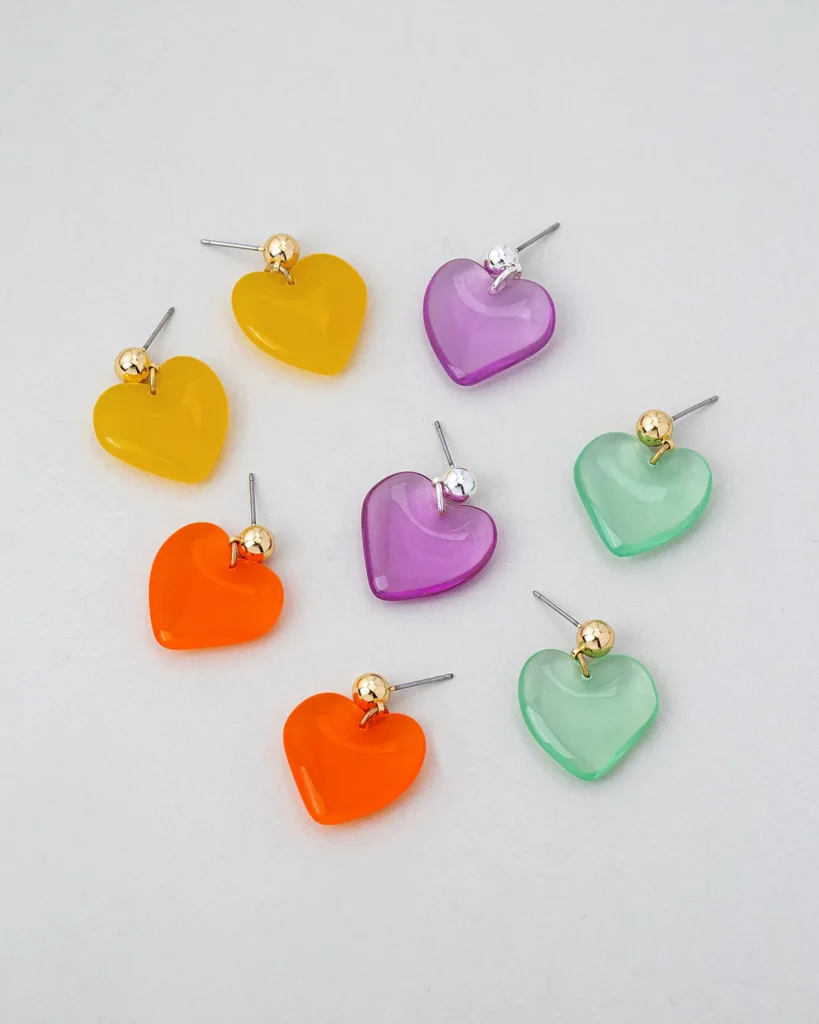
Resin jewelry has become increasingly popular among fashion jewelry brands because of its lightweight feel, creative designs, and unlimited color possibilities.
From transparent resin earrings and floral resin pendants to statement bracelets and custom resin accessories, resin allows designers to create unique jewelry collections.
However, one common concern from buyers and jewelry brands is:
Why does resin jewelry turn yellow over time?
The answer depends on several factors, including resin quality, manufacturing processes, UV exposure, and storage conditions.
For jewelry brands, understanding resin quality is important because yellowing problems can affect customer satisfaction, product reviews, and brand reputation.
As a professional resin jewelry manufacturer specializing in OEM and ODM production, we understand that high-quality resin jewelry requires not only good materials but also strict production control.
What Causes Resin Jewelry to Turn Yellow?
1. UV Exposure and Sunlight
The most common reason resin jewelry turns yellow is long-term exposure to ultraviolet (UV) light.
UV rays can cause chemical changes inside resin materials, leading to oxidation and discoloration.
This problem is especially noticeable in:
- Clear resin earrings
- Transparent pendants
- White resin accessories
- Floral resin jewelry
Professional manufacturers reduce this risk by selecting UV-resistant resin materials and controlling the production process.
2. Low-Quality Resin Materials
Not all resin materials have the same quality.
Low-cost resin may have poor resistance to:
- UV light
- Heat
- Oxidation
- Aging
Although cheaper materials can reduce production costs, they may cause:
- Yellowing problems
- Cloudy appearance
- Lower customer satisfaction
For premium jewelry collections, brands should choose jewelry-grade resin with better color stability.
Resin Quality Comparison
| Resin Type | Yellow Resistance | Suitable For |
|---|---|---|
| Low-grade resin | Low | Budget accessories |
| Standard resin | Medium | Fashion jewelry |
| Jewelry-grade resin | High | Premium collections |
3. Incorrect Resin Manufacturing Process
Even high-quality resin can develop problems if the manufacturing process is not properly controlled.
Important production factors include:
Resin Mixing
Incorrect resin and curing agent ratios may affect:
- Hardness
- Transparency
- Long-term stability
Curing Process
Professional factories control:
- Temperature
- Curing time
- Production environment
Proper curing helps improve:
- Durability
- Surface quality
- Color consistency
4. Poor Surface Finishing
Resin jewelry requires professional polishing after molding.
A good polishing process improves:
- Transparency
- Smoothness
- Premium appearance
Poor finishing may result in:
- Scratches
- Uneven surfaces
- Reduced visual quality
For high-end fashion jewelry brands, surface details strongly influence the customer’s perception of quality.
How Do Professional Manufacturers Prevent Resin Yellowing?
A reliable resin jewelry factory follows a complete quality management process.
1. Use High-Quality Materials
Professional manufacturers select resin materials based on:
- Transparency
- Hardness
- UV resistance
- Color stability
2. Control Every Production Stage
A typical resin jewelry manufacturing process includes:
Design → Prototype → Mold Development → Resin Casting → Polishing → Assembly → Quality Inspection → Packaging
Each step affects the final product quality.
3. Strict Quality Inspection
Before shipment, professional factories check:
✓ Color consistency
✓ Surface quality
✓ Transparency
✓ Scratch resistance
✓ Assembly strength
✓ Packaging condition
Quality control helps brands maintain consistent product standards.
How Long Does Resin Jewelry Last?
The lifespan of resin jewelry depends on:
- Material quality
- Manufacturing technology
- Usage environment
- Storage conditions
High-quality resin jewelry can maintain its appearance for many years when produced with proper materials and craftsmanship.
To extend product life:
- Avoid prolonged direct sunlight
- Keep jewelry dry
- Store in protective packaging
- Avoid contact with harsh chemicals
Resin Jewelry vs Other Jewelry Materials
Resin jewelry has unique advantages compared with traditional jewelry materials.
| Material | Advantages |
|---|---|
| Resin | Lightweight, colorful, creative designs |
| Sterling Silver | Premium feel, classic style |
| Gold Jewelry | Luxury positioning, high value |
| Stainless Steel | Durable and corrosion resistant |
| Brass Jewelry | Cost-effective fashion option |
Resin is especially suitable for brands looking for:
- Statement jewelry
- Colorful collections
- Lightweight designs
- Custom shapes
How to Choose a Reliable Resin Jewelry Manufacturer?
For jewelry brands, choosing the right supplier is essential.
Before working with a resin jewelry factory, consider:
1. Manufacturing Experience
Look for suppliers with experience in:
- OEM jewelry production
- ODM development
- Custom designs
- Export markets
2. Custom Development Ability
A professional factory should support:
- Custom colors
- New molds
- Prototype samples
- Private label production
3. Quality Control System
Ask suppliers about:
- Material testing
- Production inspection
- Packaging standards
- Compliance requirements
4. Flexible MOQ and Sampling
For startups and growing brands, flexible MOQ and fast sampling are important.
A good manufacturing partner should help brands test new collections with lower risk.
Common Mistakes When Buying Resin Jewelry
Mistake 1: Choosing Only the Lowest Price
The cheapest supplier may use lower-quality materials or reduce quality control.
Mistake 2: Skipping Sample Testing
Always test samples before mass production.
Check:
- Color
- Weight
- Surface quality
- Comfort
Mistake 3: Ignoring Manufacturing Capability
A supplier should provide more than finished products.
Look for:
- Design support
- Engineering experience
- Production management
Why Work With a Professional Resin Jewelry Factory?
A professional resin jewelry manufacturer can help brands from concept development to bulk production.
Services include:
- Custom resin earrings
- Resin bracelets
- Floral resin jewelry
- Statement jewelry collections
- Private label jewelry
- OEM and ODM production
With experienced manufacturing knowledge, professional factories help brands create unique jewelry collections with stable quality.
Frequently Asked Questions
1. Why does resin jewelry turn yellow?
Resin jewelry turns yellow mainly because of UV exposure, oxidation, low-quality materials, or improper manufacturing processes.
2. Does all resin jewelry turn yellow?
No. High-quality resin jewelry produced with professional materials and processes has much better color stability.
3. Can yellow resin jewelry be restored?
Usually, yellowing caused by material aging cannot be completely reversed. Prevention is the best solution.
4. What resin is best for jewelry making?
Jewelry-grade epoxy resin, acrylic resin, and cellulose acetate are commonly used for high-quality jewelry production.
5. How can brands prevent resin jewelry from yellowing?
Brands should choose reliable suppliers using quality materials, professional production processes, and strict quality control.
Conclusion
Resin jewelry yellowing is not only a material issue. It is related to resin selection, manufacturing technology, finishing processes, and quality control.
For jewelry brands looking for reliable custom resin jewelry production, choosing an experienced OEM/ODM manufacturer is the key to achieving consistent quality.
At Haishaer Jewelry, we specialize in custom resin jewelry manufacturing, helping brands develop unique collections with professional production support.
Contact us today to discuss your custom resin jewelry project, request samples, or receive our catalog.